The Move That Made Me Quit Chess for a Week
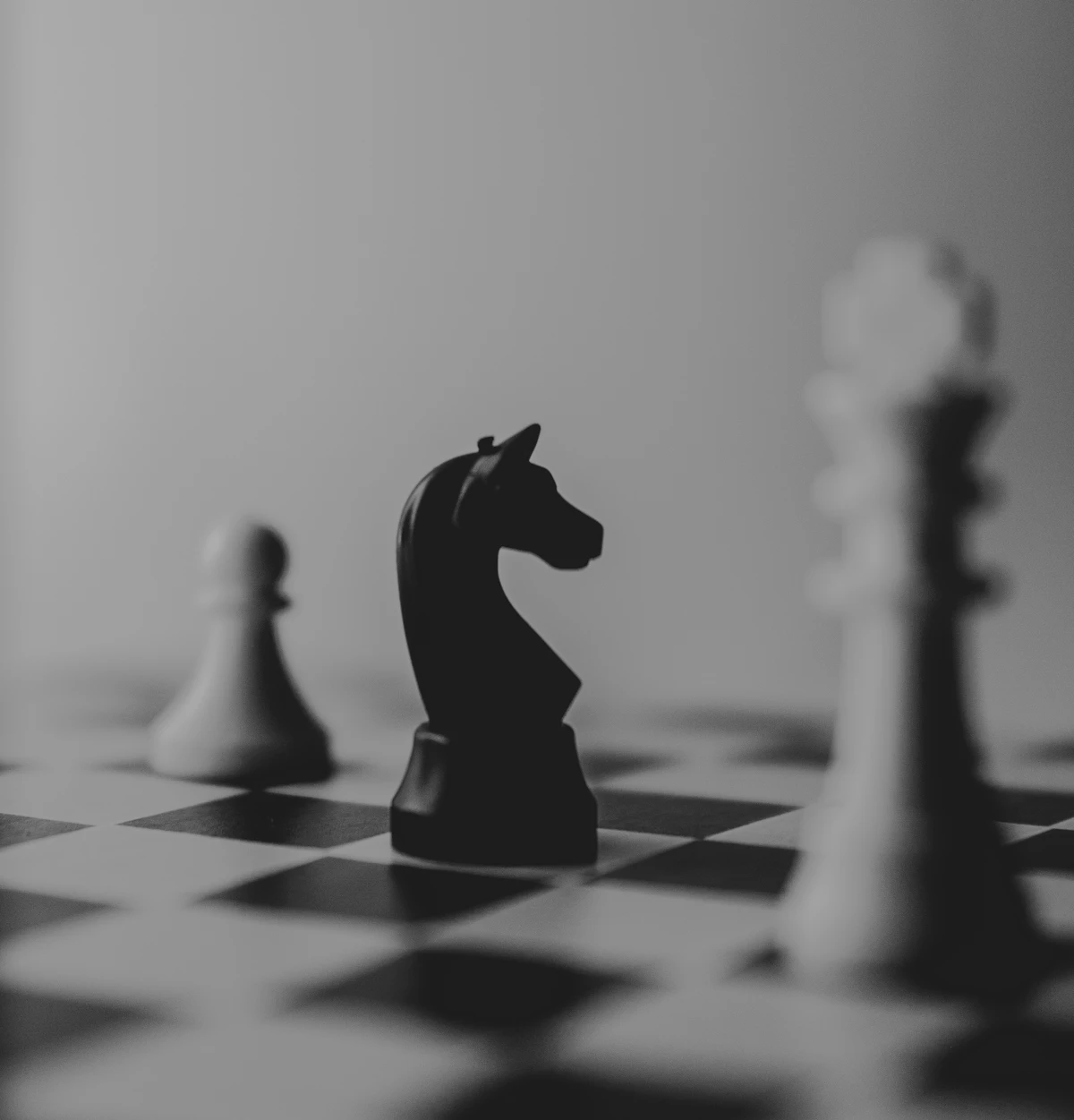
I was winning. Completely winning. Up a full rook against a guy at my local club, cruising toward an easy victory. And then he played Nd3.
One knight move. Forking my queen and my remaining rook simultaneously. I stared at the board for about thirty seconds, realized there was absolutely nothing I could do, lost my queen, and eventually lost the game.
I didn't play chess for a week after that.
When I came back, I was angry enough to actually learn what had happened. Not just that specific fork — I understood that part — but why I kept falling for tactical tricks in general. I was a decent positional player. I could set up a solid structure, develop my pieces, and reach good middlegame positions. But I kept losing material to short tactical sequences that I should've seen coming.
The answer was painfully simple: I didn't know the patterns. I was trying to calculate everything from scratch instead of recognizing tactical motifs by sight. It's like trying to read by sounding out every letter instead of recognizing whole words. Possible, but slow enough that you'll never keep up.
So I sat down and learned the basic tactical patterns. Forks, pins, skewers, discovered attacks. And my results changed almost immediately.
Forks — The Tactic That Wins the Most Games
Photo by Unsplash on Unsplash
A fork is when one piece attacks two or more enemy pieces at the same time. The opponent can only save one, so you win material.
Knight forks are the most common and the most devastating. Knights are the only piece that can attack a square without being able to be captured by the piece on that square — because knights jump over pieces and move in an L-shape that bishops, rooks, and queens can't replicate. This makes knight forks sneaky. They come from angles you're not watching.
The classic beginner knight fork: your opponent's king and queen are on the same rank or file with a gap between them, and your knight jumps to a square that attacks both. They have to move the king, you take the queen. Game over.
But forks aren't limited to knights. Every piece can fork:
Pawn forks happen when a pawn advances and attacks two pieces diagonally. These are especially nasty because pawns are worth so little — losing a knight to save a rook from a pawn fork still hurts.
Bishop forks work on diagonals. If your opponent's rook and knight are on the same diagonal with no pieces in between, your bishop can attack both.
Queen forks are the most versatile because the queen attacks in every direction. But queen forks are also the riskiest — if your queen goes hunting, she might get trapped.
Even kings can fork pieces in the endgame, which is something most beginners don't think about.
The way to spot forks: before every move, look for squares where one of your pieces could attack two valuable targets simultaneously. It takes practice, but once you start seeing the patterns, you'll be amazed how often fork opportunities appear. Playing daily puzzles specifically helped me develop this vision — about 40% of tactics puzzles involve some kind of fork.
Pins and Skewers — When Pieces Get Stuck
Pins and skewers are related tactics, and they're both based on the same idea: a piece is stuck on a line because moving it would expose something more valuable behind it.
A pin happens when a piece is attacked but can't move because it would expose a more valuable piece behind it. The classic example: your bishop attacks a knight, and behind that knight is the opponent's king. The knight literally can't move — it's "pinned" to the king by the rules of chess. If the piece behind the pinned piece is the king, it's called an absolute pin (the pinned piece literally can't move). If it's anything else, it's a relative pin (the piece CAN move, but doing so would lose the more valuable piece behind it).
Pins are incredibly powerful in practice because a pinned piece is essentially paralyzed. Once you pin something, you can pile more attackers on it. The opponent has to either break the pin (by moving the piece behind it or blocking the line) or lose material.
A skewer is the reverse of a pin — you attack a valuable piece, and when it moves, you capture the less valuable piece behind it. The most common skewer: a bishop or rook checks the king, the king moves, and the piece behind the king gets taken.
I used to confuse pins and skewers all the time. Here's my simple rule: in a pin, the less valuable piece is in front. In a skewer, the more valuable piece is in front and has to move.
Both tactics rely on piece alignment — pieces being on the same rank, file, or diagonal. This is why experienced players instinctively avoid putting their king and queen on the same diagonal or their rook and king on the same file without protection. They've been burned too many times.
Discovered Attacks — The Tactic Nobody Sees Coming

Photo by Unsplash on Unsplash
If forks are the most common tactic, discovered attacks are the most dangerous. And they're the one that catches intermediate players off guard the most.
A discovered attack happens when one piece moves out of the way, revealing an attack from a piece behind it. The piece that moves can go anywhere — including to a square that creates its own separate threat. When the discovered attack is a check (a discovered check), it's even more brutal because the opponent MUST deal with the check, giving you a free move to capture or threaten with the piece that moved.
The absolute worst case: a double check. This is when the moving piece AND the revealed piece both give check simultaneously. The only way to escape a double check is to move the king — you can't block two checks at once, and you can't capture two pieces at once. Double checks are relatively rare, but when they happen, they often lead to mate.
I once lost a game to a discovered check where my opponent moved a knight to fork my queen and rook, while the bishop behind it gave check. I couldn't save anything. The whole sequence started from a position that looked completely normal two moves earlier.
The reason discovered attacks are so hard to see: you're watching the piece that moves, not the piece behind it. Your brain tracks movement. A piece sitting still on b2 doesn't register as a threat — until the piece on d4 slides out of the way and suddenly that bishop is staring at your king on g7.
Training tip: when you're looking at a position, check what's behind your pieces that are about to move. Is there a rook, bishop, or queen lined up behind them? If so, think about what happens when that piece moves. You might find a discovered attack you'd otherwise miss.
This is exactly the kind of pattern recognition that regular puzzle practice builds. You don't need to be a genius calculator — you just need to recognize the setup so your brain flags it automatically.
How I Actually Got Better at Spotting Tactics
Reading about tactics isn't the same as seeing them in your games. I knew what a fork was for years before I could consistently spot them at the board. The gap between knowledge and pattern recognition is real, and it's only bridged by practice.
Here's what worked for me:
First — puzzles. Lots of them. Not random puzzles from a book, but themed sets. I'd do 20 fork puzzles in a row, then 20 pin puzzles, then 20 discovered attacks. Themed puzzle sets train your brain to recognize specific patterns, and that recognition transfers to real games much faster than solving random problems.
Second — the three-checks habit. Before every move in a real game, I'd force myself to check three things: are there any checks available? Any captures? Any threats? This is the "CCT" method — checks, captures, threats — and it's old advice that actually works. Most tactical shots start with one of these three. I've written about this approach for reducing blunders and it applies directly to finding your own tactics too.
Third — reviewing my games specifically for missed tactics. After every rapid game, I'd use the analysis board to find positions where I had a tactical shot and didn't see it. Not just the blunders — the missed OPPORTUNITIES. This was humbling. I was regularly missing winning combinations because I wasn't looking for them.
Fourth — slow chess. You can't practice tactics in bullet. You barely see them in 3+0 blitz. In 10+5 or 15+10, you actually have time to scan for forks, pins, and discovered attacks before committing to a move. Speed comes later, after the patterns are burned into your visual memory.
The improvement was dramatic. My blunder rate dropped by about 40% within two months, and I started winning games in the middlegame that I would've previously drawn or lost. Tactics aren't everything in chess — but below 2000 rating, they're the closest thing to everything. A player who sees tactics will beat a player who understands strategy but misses combinations, almost every time.
If you want to start drilling right now, CheckmateX's puzzle trainer has themed tactical sets organized by pattern type. Do 15-20 per day, focused on one theme at a time. Two weeks of that and you'll be seeing forks in positions where you used to see nothing.